Smarter Unified Communications Solutions for a Connected Workplace
Modern workplaces depend on fast, reliable communication. Employees may work from different offices, from home, or while traveling, while customers expect businesses to remain accessible across multiple channels. Managing voice calls, messaging, video meetings, file sharing, and collaboration through disconnected tools can make everyday communication more complicated than it needs to be.
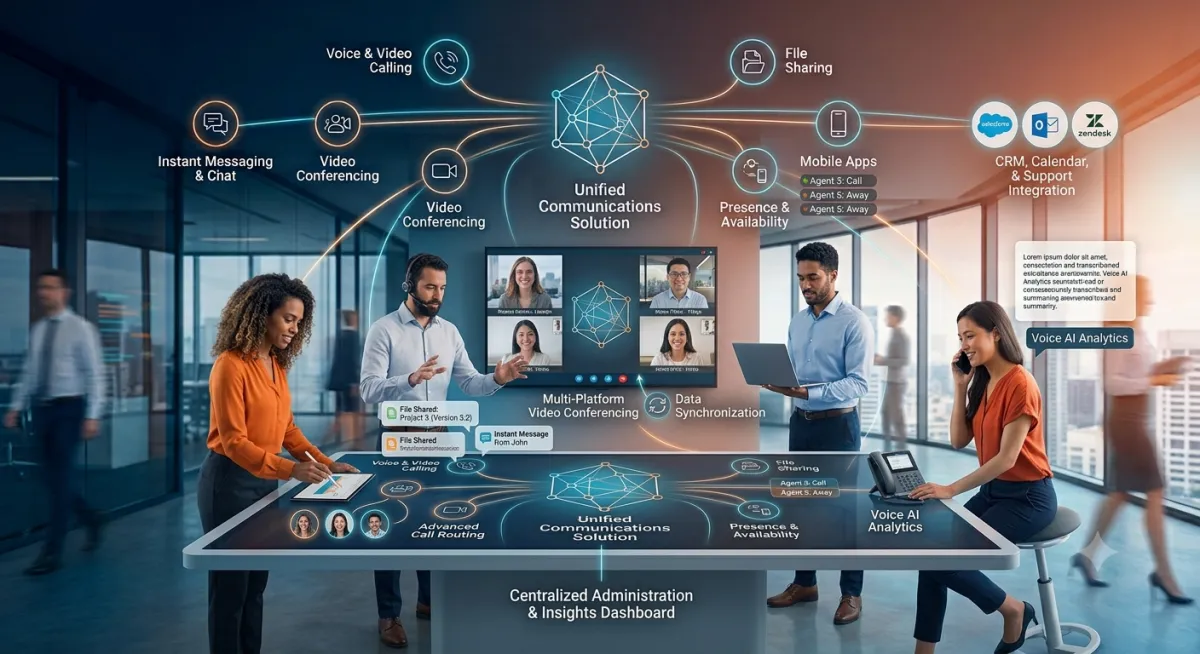
Unified communications solutions bring multiple communication channels together within a connected environment. Depending on the platform and business requirements, this can include voice calling, video conferencing, instant messaging, file sharing, presence information, scheduling, and other collaboration capabilities.
For businesses looking to improve communication while supporting flexible working arrangements, a smarter unified communications strategy can provide a strong foundation for connected and efficient operations.
Bring Business Communication into One Connected Environment
When employees use separate systems for calling, messaging, meetings, and collaboration, information can become scattered across different applications. Switching between tools can also make it harder to maintain context during conversations.
Unified communications help bring these functions together so employees can access the communication tools they need from a more centralized environment. This can simplify everyday interactions and reduce the friction associated with managing multiple communication platforms.
A connected communication environment can include:
Business voice and video calls
Instant messaging and team chat
Video conferencing
File and screen sharing
Presence and availability information
Business phone features
Mobile communication
Collaboration tools
The exact combination can be configured according to the organization's requirements.
Keep Teams Connected Across Locations
Workplace communication is no longer limited to employees sitting in the same office. Remote and hybrid teams need access to consistent communication tools regardless of where they work.
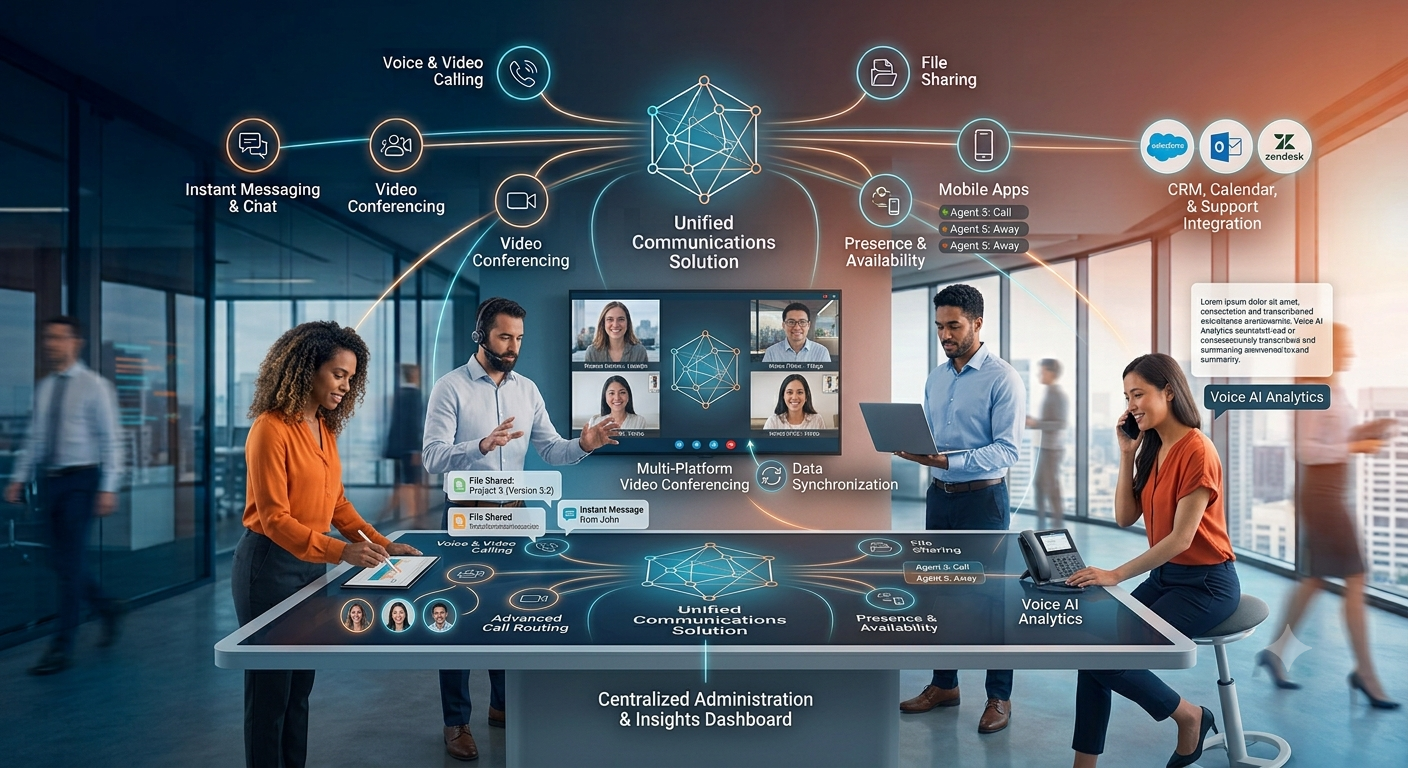
Modern unified communications platforms can extend calling, messaging, meetings, and collaboration capabilities across different devices and locations. This allows employees to communicate using business systems while working from an office, home, or another location.
This flexibility can help businesses maintain consistent communication as their workforce becomes more distributed.
Improve Collaboration Between Departments
Effective collaboration requires employees to exchange information quickly and maintain visibility into ongoing conversations.
When voice, messaging, video, and collaboration capabilities are connected, employees can move between different communication methods without relying on several disconnected platforms. This can make it easier for teams to discuss projects, share information, and coordinate work.
For example, a team member might begin a conversation through messaging and then move to a voice or video call when the discussion requires more detail. Having these capabilities within a connected environment can make everyday collaboration more straightforward.
Support Remote and Hybrid Employees
Remote work has changed the expectations businesses have for communication technology. Employees need to remain reachable without being tied to a specific desk or office.
Unified communications can extend business calling, messaging, presence, and video capabilities to supported devices and locations. Employees can use communication tools through computers, mobile devices, or other supported endpoints while remaining connected to the organization's communication environment.
This helps businesses create a more consistent experience for employees regardless of where they work.
Make Customer Communication More Efficient
Internal communication is only one part of the equation. Businesses also need reliable ways to communicate with customers, prospects, partners, and suppliers.
A connected communication environment can help employees access the right communication channel when customers need assistance. Business phone capabilities, messaging, collaboration, and other communication tools can work together to create a more organized communication process.
When employees can quickly identify availability and connect through the appropriate channel, customer conversations can move forward with fewer unnecessary delays.
Connect Communication with Business Applications
Communication becomes more valuable when it works alongside the applications employees already use.
Modern unified communications environments can integrate with business applications and collaboration platforms, allowing organizations to connect communication workflows with broader business processes.
Depending on the technology environment, integrations can help connect communication with areas such as:
Customer relationship management
Calendars and scheduling
Productivity applications
Customer service workflows
Business analytics
Collaboration platforms
Contact center operations
This can reduce the need for employees to manually move information between unrelated systems.
Improve Workplace Productivity
Employees lose valuable time when they have to search through different applications to find messages, join meetings, make calls, or locate shared information.
A unified communication environment can simplify these everyday tasks by bringing important communication capabilities into a more consistent workspace. Microsoft describes unified communications as a way to reduce friction between communication tools while helping employees collaborate and access information more efficiently.
The result can be a smoother communication experience that allows employees to spend more time focusing on their actual responsibilities.
Create a Flexible Communication Strategy
Every business has different technology requirements. Some organizations may prefer cloud-based communication, while others may need a hybrid approach because of existing infrastructure, operational requirements, or other considerations.
Modern unified communications solutions can support different deployment approaches, including cloud, on premises, and hybrid environments.
This flexibility allows businesses to build their communication infrastructure around their specific needs rather than forcing every organization into the same technology model.
Make Communication Easier to Manage
Managing multiple independent communication systems can increase the workload for IT teams. Separate applications may require different administration processes, user management, updates, and support procedures.
A unified communication strategy can centralize more of the communication environment, making it easier to manage users, services, devices, and communication capabilities.
Centralized management can become particularly valuable as a business grows and adds employees, departments, offices, or remote workers.
Scale Communication as Your Business Grows
A communication system should support business growth rather than become an obstacle to it.
Cloud based unified communications services can make it easier to add or remove users as workforce requirements change. Businesses can also adapt communication capabilities as teams expand or operational needs evolve.
This scalability can be useful for businesses opening new locations, expanding remote teams, increasing customer support operations, or restructuring departments.
Instead of maintaining disconnected communication systems for every stage of growth, businesses can build a more adaptable communication foundation.

Prepare Your Workplace for the Future
Communication technology continues to evolve. Cloud services, artificial intelligence, advanced meeting capabilities, mobile communication, and connected business applications are becoming increasingly important parts of modern workplace technology.
A unified communications strategy gives businesses a foundation that can adapt as these technologies develop. Rather than focusing only on today's communication requirements, organizations can build an environment that provides room for new capabilities and changing workplace expectations.
Build a Smarter Connected Workplace
Effective communication is at the center of every successful organization. Employees need reliable ways to communicate with one another, customers need accessible support, and business leaders need communication systems that can adapt as the company grows.
Smarter unified communications solutions can bring voice, messaging, video, collaboration, and other communication capabilities together in a connected environment. This can simplify workplace communication, support remote and hybrid teams, improve collaboration, and create a more flexible foundation for future growth.
With the right unified communications strategy, businesses can create a workplace where teams stay connected, information moves efficiently, and communication supports the way the organization works today and tomorrow.
